How to Choose the Right Exhaust System for Your Vehicle?
Choosing the right exhaust system can significantly impact your vehicle's performance and sound. As John Smith, an automotive exhaust expert, once said, “The right exhaust system can transform your ride.” Many car owners overlook this crucial component.
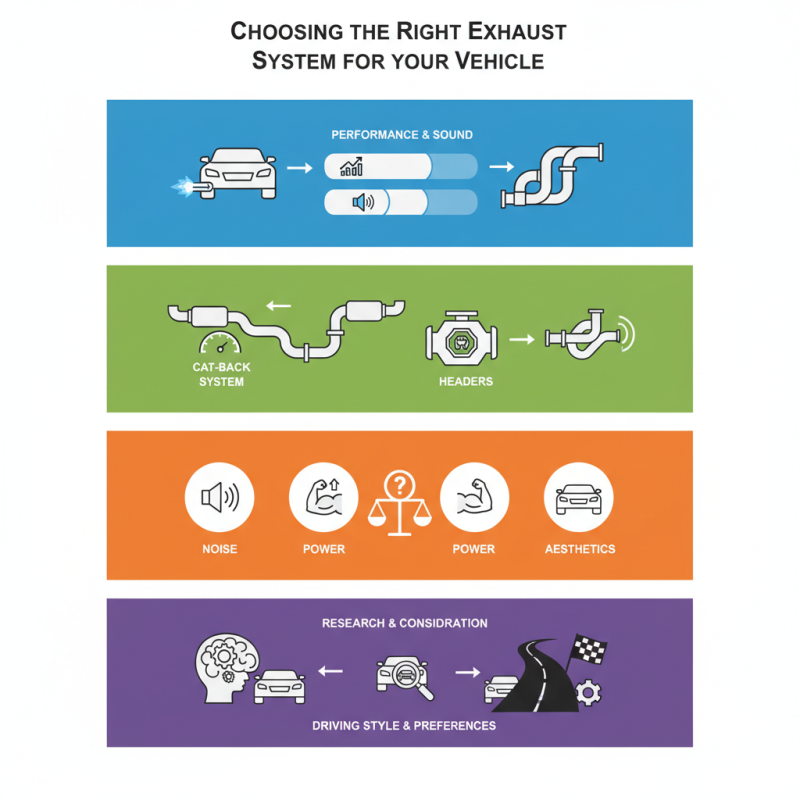
Various exhaust systems can enhance power and efficiency. From cat-back systems to headers, each option offers unique benefits. For instance, a performance exhaust can provide a deeper sound and improved airflow. However, choosing a system that's too loud may not suit everyone’s taste.
Reflecting on your vehicle's needs is essential. A system designed for maximum output may not be necessary for daily driving. Consider whether you prioritize noise, power, or aesthetics. Finding a balance is often challenging, yet essential. You should ensure the selected exhaust system aligns with your driving style and preferences. Making the right choice requires careful thought and research.
Factors to Consider When Choosing an Exhaust System
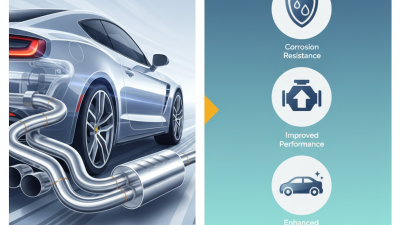
When choosing the right exhaust system for your vehicle, several factors come into play. One of the most critical is the material used. Stainless steel is durable and resists corrosion, enhancing longevity. According to a recent industry report, 35% of vehicle owners prefer stainless steel systems for their durability. However, mild steel options are cheaper and may appeal to budget-conscious buyers, even if they require more frequent replacement.
Another key consideration is the exhaust diameter. A larger diameter can improve engine efficiency, but excessively large pipes may affect back pressure and performance. Research indicates that optimal exhaust diameter can boost horsepower by up to 10%, but choosing the right size requires a balance. Too much increase can lead to losses rather than gains, prompting vehicle owners to rethink their specifications.
Sound is also a significant factor in the decision-making process. Many enthusiasts want a deeper, more aggressive tone. A survey found that 60% of car lovers prioritize sound quality when selecting an exhaust. However, some may find that an overly loud system could attract unwanted attention, leading to legal issues or neighborhood complaints. Understanding personal preferences alongside local regulations is crucial for making the right choice. Each of these factors presents challenges and requires careful reflection to ensure optimal performance and satisfaction.
Different Types of Exhaust Systems and Their Benefits
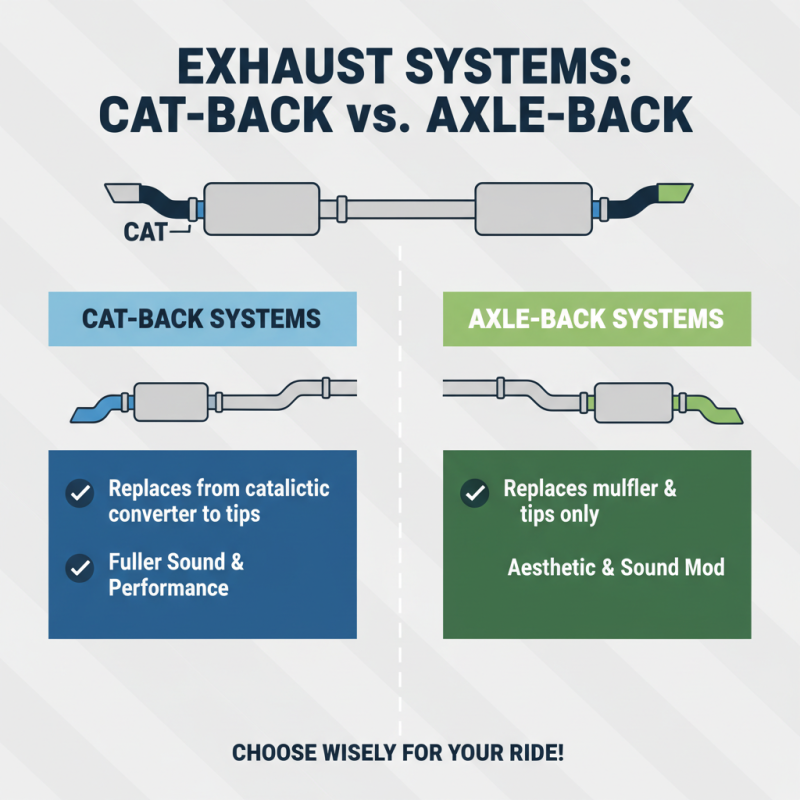
Choosing the right exhaust system requires understanding the different types available. There are mainly two categories: cat-back and axle-back systems. Cat-back systems replace an entire section of the exhaust, while axle-back systems only change the parts behind the rear axle. Each type offers unique benefits.
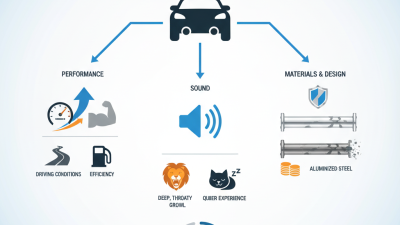
A study from the Society of Automotive Engineers indicates that quality exhaust systems can improve horsepower by up to 10%. This enhancement can lead to a more responsive driving experience. If you’re looking for better sound, an upgraded system can significantly alter your vehicle’s acoustic profile. Some enjoy a deep, throaty growl, while others prefer a quieter experience.
Tips: Consider your driving style. If you prioritize performance, opt for a cat-back system. For everyday driving with a mild upgrade in sound, an axle-back might suffice. Always check compatibility with your vehicle model. Small inconsistencies in fit can lead to leaks or inefficiencies. Your safety and vehicle longevity could depend on these choices.
Understanding Your Vehicle's Engine Performance and Needs
Choosing the right exhaust system starts with understanding your vehicle's engine. The exhaust system affects engine performance in many ways. It helps in regulating back pressure and enhances airflow. This balance is crucial for optimal power output. A system that restricts airflow might cause engine strain. Conversely, too much airflow can lead to loss of low-end torque.
Every vehicle has unique needs based on its engine type. For instance, a smaller engine may benefit from a quieter system. A high-performance engine might require a more aggressive setup. Think about your driving style, too. Do you prioritize fuel efficiency or sheer power? It's okay if you feel stuck deciding. Many areas are tricky, and your preferences might shift over time.
Listen to your engine's feedback; it holds the key. Changes in sound can indicate a need for adjustment. Pay attention to acceleration and throttle response as well. They tell you if your current system meets your needs. Sometimes, you might need to experiment with different setups. Be prepared for trial and error during this journey.
Legal Regulations and Sound Levels in Exhaust System Selection
When selecting an exhaust system, consider legal regulations and sound levels seriously. Different regions have varying laws about exhaust noise. Some areas impose strict limits on decibel levels for street vehicles. It's crucial to check your local regulations. Ignoring these can lead to fines or necessary modifications.
Tips: Research the specific sound level limits in your area. Determine if your vehicle will meet those limits with potential changes. This helps avoid legal troubles later on.
Sound levels can impact your driving experience. A loud exhaust may seem appealing, but it could attract unwanted attention from law enforcement. Additionally, excessive noise may disturb your neighbors. Comfort should balance with performance.
Tips: Listen to different exhaust sounds in person. Visit car shows or local meetups. It helps to know what you prefer and find a system that fits those preferences. Always test sound levels before finalizing your purchase.
Installation Options: Professional vs. DIY Exhaust System Installation
Choosing the right exhaust system for your vehicle involves understanding installation options. You can decide between professional installation and tackling the project yourself. Each choice has its pros and cons.
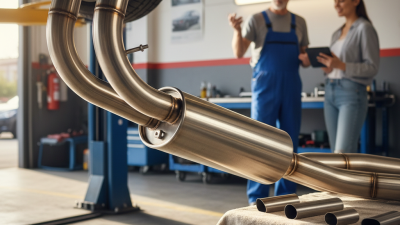
Professional installation guarantees skilled work. Technicians ensure that all parts fit perfectly. This path saves time and often provides a warranty. However, it can be more expensive. You might feel a pinch in your wallet after paying the bill.
DIY installation, on the other hand, can be rewarding and cost-effective. It allows you to learn about your vehicle. Yet, it comes with challenges. You need the right tools and some mechanical skill. Mistakes can lead to extra costs or safety issues. Carefully weigh your confidence level before jumping into this project.
 +86 17870576410