How to Choose Flexible Exhaust Tubing for Optimal Performance?
Choosing the right Flexible Exhaust Tubing is crucial for automotive performance. Mark Anderson, an industry expert, once said, "The right tubing can make all the difference." This statement highlights the importance of selecting tubing that suits specific needs.
Flexible Exhaust Tubing comes in various materials and sizes. Each type offers unique benefits. Some materials resist heat better, while others provide flexibility. It’s essential to consider your engine's requirements. Brands often market their products as the best. Yet, performance can vary.
Many overlook the installation process. Poor installation can negate the benefits of high-quality tubing. Observing how tubing connects to the exhaust system matters. A faulty connection leads to leaks and reduced efficiency. Reflection on these aspects is key. A meticulous approach will yield optimal results.
Understanding the Importance of Flexible Exhaust Tubing in Performance
Flexible exhaust tubing plays a crucial role in enhancing vehicle performance. It allows for better routing and installation flexibility, accommodating tight spaces and complex designs. According to the Society of Automotive Engineers, nearly 30% of performance issues stem from inadequate exhaust systems. This emphasizes the importance of selecting the right tubing.
The material of the tubing affects both durability and functionality. Stainless steel offers corrosion resistance, while aluminized steel is lighter but less durable. A report from the American Society of Mechanical Engineers indicates that proper installation can improve exhaust flow by up to 20%. This can lead to a noticeable difference in engine efficiency and power.
However, choosing the wrong tubing can lead to issues. A poorly designed exhaust could increase back pressure, which harms performance. Additionally, low-quality materials might not withstand heat, causing failures. It's essential to invest time in research and avoid impulsive decisions based on price alone. Exploring various options and understanding their implications will yield the best results for your vehicle.
Evaluating Different Materials for Flexible Exhaust Tubing Construction
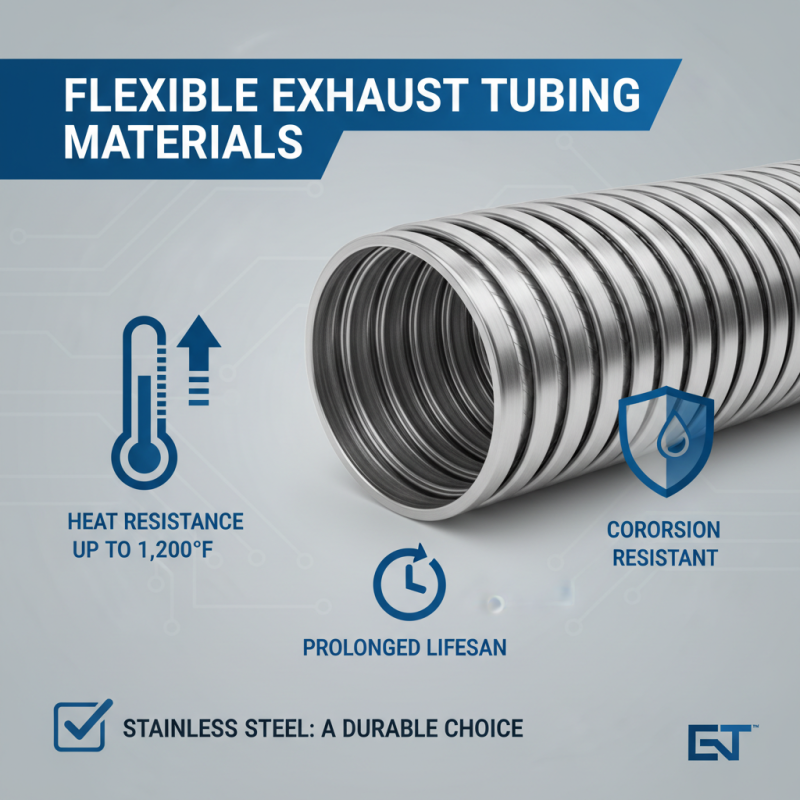
When selecting flexible exhaust tubing, material choice plays a key role in performance. Stainless steel is a popular option due to its durability and heat resistance. Data from industry studies show that stainless steel tubing can withstand temperatures up to 1,200°F. This characteristic helps reduce the risk of corrosion and prolongs the lifespan of exhaust systems.
However, alternatives like silicone tubing are gaining traction. They offer excellent flexibility, allowing for easier installation in tight spaces. Research indicates that silicone can handle temperatures up to 500°F while maintaining its integrity. This makes it suitable for specific applications where traditional tubing may fail. Notably, silicone is lighter than stainless steel, which can benefit vehicle weight distribution.
Choosing a material isn’t just about heat. Consider the environment it will operate in. For example, in salt-laden coastal areas, corrosion-resistant materials are vital. A report suggested that 30% of exhaust issues stem from environmental factors. Lack of proper assessment can lead to early failures. On the other hand, over-engineering can inflate costs unnecessarily. It's important to strike a balance, ensuring optimal performance without overspending. Keep these factors in mind, and you’ll move closer to making the right choice.
Key Factors to Consider in Sizing Flexible Exhaust Tubing
When choosing flexible exhaust tubing, sizing is critical for performance. The diameter of the tubing will significantly affect exhaust flow. A larger diameter allows for better flow but may be unnecessary in smaller systems.
Too big may create back pressure.
Too small restricts the flow, leading to inefficiencies. Balancing these factors is essential.
Material choice also plays a role in sizing. Thinner materials can decrease weight but may not withstand high temperatures.
Thicker materials resist heat better but may add extra weight.
Consider the environment where the tubing will be used. Factors like corrosion and temperature extremes must be assessed. Each decision impacts longevity and performance.
Installation can be tricky. Misalignment in the tubing can lead to leaks or disruptions in flow. Proper clamps and connections are vital to ensure a snug fit. Sometimes, adjustments are needed during installation to achieve the right alignment. These reflections highlight that choosing flexible exhaust tubing goes beyond simple dimensions; it involves careful consideration of multiple factors.
Analyzing the Impact of Tubing Design on Exhaust Flow Efficiency
Choosing the right flexible exhaust tubing is crucial for enhancing exhaust flow efficiency. The design of tubing significantly impacts engine performance. A well-designed curve allows smooth gas flow. Sharp bends can create turbulence, slowing down exhaust gases. This can lead to a loss of power in the vehicle. Flexibility in tubing is also important; it can accommodate engine movement and vibrations.
Material choice plays a role as well. Lightweight materials can reduce the overall weight, improving fuel efficiency. However, durability is essential. Cheaper materials may corrode over time, leading to frequent replacements. A balance must be struck between cost and performance.
It's worth reflecting on the precision of installation. Misalignment can hinder exhaust flow. Regular checks are advisable. Even minor leaks can affect engine efficiency, emphasizing the need for a careful approach. Understanding the nuances of exhaust flow is vital for any performance enhancement project.
Installation Tips for Optimal Performance with Flexible Exhaust Tubing
When installing flexible exhaust tubing, several factors are crucial for optimal performance. The diameter of the tubing can significantly affect airflow. A study from the Automotive Engineering Department shows that a 3-inch diameter can improve exhaust flow by up to 25%. Proper sizing prevents restrictions that may hinder engine efficiency.
Material choice is equally important. Using high-temperature resistant materials ensures longevity. A report from the Exhaust Systems Research Institute indicates that stainless steel options last nearly twice as long as lower-quality alternatives. This durability minimizes the need for frequent replacements, saving time and money in the long run.
It's essential to pay attention to installation techniques. Proper sealing at joints can prevent leaks. A poorly installed system can lose up to 15% of exhaust flow. Regular inspections help identify any issues early. Ignoring this can lead to performance drops. For best results, consider the specific vehicle and its needs. Tailored solutions often yield the best performance outcomes.
How to Choose Flexible Exhaust Tubing for Optimal Performance?
| Dimension |
Material |
Nominal Size (inches) |
Flexibility Rating |
Temperature Resistance (°F) |
Application |
| Length: 6 ft |
Stainless Steel |
3 |
High |
1200 |
Automotive |
| Length: 10 ft |
Aluminized Steel |
4 |
Moderate |
1000 |
Heavy Machinery |
| Length: 12 ft |
Rubber |
5 |
Low |
750 |
Motorcycles |
| Length: 8 ft |
Silicone |
2.5 |
Very High |
1500 |
High-Performance Vehicles |
 +86 17870576410