Top Exhaust Pipe Flange Suppliers for Global Buyers
Choosing the right Exhaust Pipe Flange supplier can affect fitment, durability, and production stability. Global buyers need more than attractive pricing. They need consistent dimensions, dependable materials, and clear quality records.
Ethan Cole, a senior exhaust-system engineer, explains, “A reliable flange begins with fit, but survives through material discipline.” That principle matters during daily sourcing. A flange may look precise on a sample. It may still fail after repeated heat cycles. Wall thickness, bolt-hole alignment, sealing surfaces, and weld quality deserve close attention.
Small details matter.
This guide examines leading Exhaust Pipe Flange suppliers for international buyers. It considers manufacturing experience, material options, inspection methods, export support, and communication quality. Stainless steel, aluminized steel, and carbon steel each serve different operating conditions. The best choice depends on temperature, corrosion exposure, vibration, and installation design.
Supplier evaluation should also include drawing control and batch traceability. Ask whether inspection reports match the delivered parts. Confirm packaging before shipment. Moisture inside poor packaging can create avoidable surface damage. Delivery promises also need careful review. A supplier with excellent engineering can still disappoint through weak production planning.
There is no perfect supplier for every project. That is easy to forget. Price often receives too much attention. Fit, repeatability, and technical response may matter more over time. Buyers should compare samples, documentation, and communication before approving large orders. This practical approach reduces uncertainty and supports more reliable global procurement.
Exhaust Flange Types: 2-Bolt, 3-Bolt, V-Band, and Slip-Fit Designs
Choosing exhaust flange suppliers requires more than comparing unit prices. Buyers should verify material grade, wall thickness, bolt spacing, and dimensional tolerances. A flange may look correct yet leak after thermal cycling. That risk is easy to underestimate.
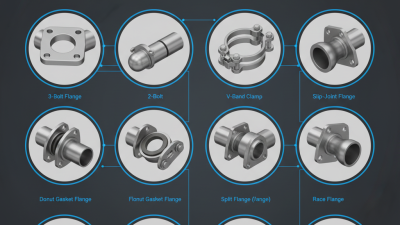
Two-bolt flanges suit compact exhaust connections and straightforward maintenance. Three-bolt designs spread clamping force across a wider joint. They often support stronger alignment under vibration. V-band flanges provide quick assembly, clean positioning, and reliable sealing when the clamp fits evenly. Slip-fit designs slide over tubing and allow practical adjustments before welding or clamping. They are flexible, but poor overlap can cause leaks or weakened joints. Small details matter.
Experienced suppliers should provide production drawings, inspection records, sample parts, and material traceability. Ask how each flange handles heat, corrosion, and repeated expansion. Packaging also matters for global shipments; bent rings create costly delays. Some drawings are confusing. I have seen bolt-circle measurements presented without a clear reference point. Request a marked sample or 3D file before approval. A dependable supplier communicates limitations honestly, rather than promising that one flange suits every vehicle or exhaust system.
Top Exhaust Pipe Flange Suppliers for Global Buyers — Exhaust Flange Types: 2-Bolt, 3-Bolt, V-Band, and Slip-Fit Designs
Comparison of the typical integrated fastening hardware used by four common exhaust connection designs. The figures describe the joint design rather than any supplier or brand.
Two-bolt and three-bolt flanges use the stated number of bolts to compress the joint. A V-band connection typically uses one circumferential clamp, while a slip-fit joint has no integrated fastener and normally requires a separate clamp or weld for final retention. Actual hardware may vary by vehicle, pipe diameter, temperature, and installation standard.
Material Selection: 409 Stainless Steel with 10.5–11.75% Chromium
For global buyers, 409 stainless steel is a practical choice for exhaust pipe flanges. Its 10.5–11.75% chromium content creates a protective oxide layer during normal service. This helps the flange resist oxidation, road moisture, and repeated heating. It is not a decorative stainless grade. Surface appearance can change over time.
A suitable flange begins with verified material. Ask suppliers for mill certificates showing chromium content, carbon level, thickness, and heat number. The certificate should match the delivered batch. Dimensional checks also matter. Bolt holes must align accurately, while the sealing face should remain flat after cutting and welding. In practical fabrication, poor fit-up often causes more trouble than the steel itself. Small distortions become exhaust leaks.
409 stainless steel handles heat well, but its performance depends on design and processing. Thermal cycling can expose weak welds, sharp corners, or insufficient flange thickness. A supplier should explain its forming, welding, and inspection methods clearly. Traceable records are useful for international purchasing and quality reviews. They also reduce uncertainty when shipments cross borders.
The material is not perfect. It offers less general corrosion resistance than higher-alloy stainless grades, especially in salty environments. I would avoid choosing it by chromium percentage alone. Exhaust temperature, flange thickness, joint design, and local exposure should guide the decision. A lower-cost part may become expensive after repeated replacement. Careful technical questions usually reveal the supplier’s real capability.
Manufacturing Standards: 2–4 mm Thickness, CNC Cutting, and Flatness Control
Top Exhaust Pipe Flange Suppliers for Global Buyers
Manufacturing Standards: 2–4 mm Thickness, CNC Cutting, and Flatness Control
Global buyers need exhaust pipe flanges that survive heat, vibration, and repeated assembly. OICA reported 93,546,599 motor vehicles produced worldwide in 2023. That scale increases pressure on suppliers to deliver stable dimensions, not occasional excellence. For many exhaust applications, 2–4 mm steel thickness balances stiffness, weight, and forming cost. The correct thickness still depends on vehicle design, temperature, and mounting load.
CNC cutting helps maintain bolt-hole position and the inner opening. However, cutting accuracy alone is not enough. Heat can distort thin material near the edge. Reliable suppliers should inspect thickness with calibrated gauges and verify flatness across the sealing face. A practical check uses a granite surface plate and feeler gauges. Some buyers also request coordinate measuring machine reports. ISO 2768-1 can support general tolerances, but it should not replace drawing-specific requirements. I have seen a flange meet its drawing, yet seal poorly after welding. That gap deserves review.
Tips: Ask for material certificates, first-article inspection records, and a flatness limit in writing. Specify the measurement method, datum points, and sampling quantity. Confirm whether 2 mm material is suitable for your thermal cycle. The IEA Global EV Outlook 2024 recorded nearly 14 million electric-car sales in 2023, so exhaust demand may change unevenly across regions. Avoid relying on old volume forecasts. Small process details matter.
 +86 17870576410