+86 17870576410

Choosing the right Stainless Steel Exhaust Tubing supplier affects durability, fitment, sound, and long-term maintenance. A polished surface may look impressive, but it cannot replace sound metallurgy or accurate fabrication.
Metallurgy professor Harry Bhadeshia offers a useful warning: “Stainless steel is not stainless.” His observation reminds buyers that grade selection matters. Exhaust systems face heat cycles, condensation, road salt, vibration, and acidic deposits. A supplier should explain why 304, 316, or 409 stainless steel suits a specific vehicle and operating environment. The answer should include evidence, not vague promises.
Quality appears in small details. Check wall thickness, tube diameter, mandrel-bending accuracy, weld penetration, and surface consistency. Ask whether the supplier provides material certificates, dimensional inspection records, and traceability. These documents do not guarantee perfection. They do show disciplined production.
Look closely at the welds.
Reliable manufacturers usually describe testing methods, tolerance limits, packaging procedures, and replacement policies. They also understand practical installation problems, such as tight bends near catalytic converters or uneven flange alignment. Delivery capacity matters, especially for custom orders and recurring production.
This guide compares leading global suppliers through technical capability, product range, certifications, customization, pricing, and customer support. The comparison is not absolute. A large supplier may offer strong logistics but limited flexibility. A smaller fabricator may deliver careful customization but struggle with volume.
That trade-off deserves attention. Buyers should verify claims independently and request samples before committing to a major order.
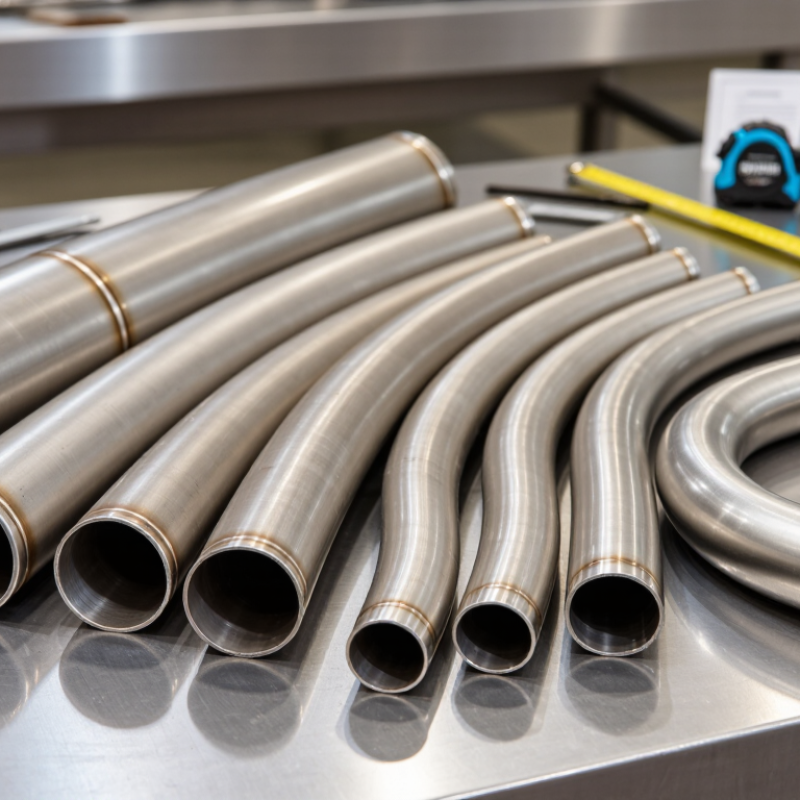
Stainless exhaust tubing is selected by chemistry, temperature, fabrication quality, and service conditions. Grade 304 commonly contains 18–20% chromium and 8–10.5% nickel. Chromium forms a protective oxide layer, while nickel improves toughness and corrosion resistance. This balance makes 304 a practical choice for many exhaust systems, especially in ordinary road and industrial environments.
In real fabrication work, tubing performance depends on more than the grade number. Check wall thickness, dimensional tolerance, weld penetration, and surface cleanliness. Heat tint around a weld can reduce corrosion resistance if it is not treated properly. I have found that a polished surface may look impressive but reveal little about internal quality. That assumption deserves more caution. Exhaust temperatures, road salt, moisture, and trapped condensation can change the result. Buyers comparing worldwide suppliers should request mill certificates, chemical analysis, pressure information, and traceability records. Small documentation gaps can become expensive later.
Tips: Confirm that “304” refers to the actual material, not only the product description. Compare chromium and nickel ranges with test reports. Inspect weld seams under strong light. For severe chloride exposure or extreme heat, ask a qualified engineer whether another stainless grade is more suitable. 304 is capable, but it is not automatically the best answer for every exhaust application.
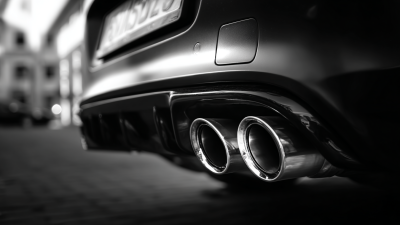
Choosing stainless steel exhaust tubing starts with heat, moisture, and service conditions, not price alone. Grade 316L contains about 2–3% molybdenum, which improves resistance to pitting from road salt and condensed exhaust moisture. Its low carbon content also supports cleaner welded joints. It suits many marine, coastal, and moderate-temperature exhaust systems.
Grade 321 uses titanium stabilization instead. Titanium binds carbon during heating and helps reduce sensitization around welds. This makes 321 a strong option for repeated high-temperature cycling, especially near turbochargers and hot engine outlets. It is not automatically better for every application. A cooler, salty environment may favor 316L, while severe thermal cycling may justify 321.
Check the tubing wall thickness, outside diameter, weld condition, and heat-treatment records. A 1.5-millimeter wall can reduce weight, but poor forming may create thin spots at bends. That detail matters. Ask suppliers for heat numbers, chemical certificates, dimensional tolerances, and pressure-test information. Traceability builds confidence when tubing crosses several processing stages.
A common mistake is selecting 321 only because the temperature sounds high. Real heat exposure depends on gas flow, insulation, engine load, and bend location. I would compare measured temperatures with the supplier’s technical data before ordering. Even experienced fabricators sometimes overlook corrosion under clamps and trapped moisture. That deserves inspection.
Top Stainless Steel Exhaust Tubing Suppliers Worldwide
Exhaust tubing suppliers should treat specification checks as production controls, not catalogue wording. ASTM A269 covers seamless and welded austenitic stainless steel tubing for general service. It does not automatically guarantee every exhaust-specific requirement. Buyers should confirm grade, outside diameter, surface condition, weld quality, and test documentation before ordering.
A 0.5–3.0 mm wall range demands careful forming control. Thin tubing can distort near bends, while heavy walls may increase weight and reduce packaging efficiency. The requested ±10% thickness tolerance should appear clearly on the purchase specification. It should also identify the measuring method and sampling frequency. A supplier’s certificate alone may be insufficient. Ask for dimensional inspection records from several coil positions.
The International Stainless Steel Forum reported global stainless crude steel production of approximately 59.1 million tonnes in 2023, showing the scale of the supply base. Scale does not equal consistency. In practice, inspectors should measure polished cross-sections with calibrated micrometers, especially near weld zones. Eddy-current testing can support weld screening, while visual checks reveal seams, scratches, and oxide marks. ASTM A269 compliance should be verified alongside heat numbers, chemical analysis, mechanical results, and traceable inspection records. Small gaps remain possible. Supplier audits and independent sampling still matter.
| Supplier Screening Category | Typical Supply Region | Common Austenitic Grades | Available Wall Range | Applicable Standard | Required Specification Check | Verification Evidence |
|---|---|---|---|---|---|---|
| High-volume welded tubing producer | East Asia and Southeast Asia | 304/304L, 316/316L, 321 | 0.5–3.0 mm commonly quoted | ASTM A269 for general-service austenitic tubing | Confirm wall tolerance of ±10% against the purchase order and applicable edition of the standard. | Mill test certificate, dimensional inspection report, eddy-current or hydrostatic test record |
| Precision welded tubing producer | Western and Central Europe | 304L, 316L, 321, 347 | 0.5–2.5 mm commonly available | ASTM A269; EN 10217-7 may also be specified | Check outside diameter, weld-bead condition, ovality, surface finish, and minimum measured wall. | EN/ASTM material certificate, weld-quality records, dimensional report |
| Automotive exhaust tubing specialist | North America and Mexico | 304/304L, 409, 439, 441, 321 | 0.6–3.0 mm, depending on grade and forming route | ASTM A269 for austenitic grades; separate specifications may apply to ferritic grades | Do not assume ASTM A269 covers ferritic exhaust grades such as 409 or 439; verify the designated material standard. | Grade-specific certificate, heat analysis, mechanical test results, corrosion or forming test data |
| Hydroformed exhaust component supplier | Central and Eastern Europe | 304L, 316L, 321, 409 | 0.8–2.0 mm frequently used for formed parts | ASTM A269 or customer engineering specification | Measure wall thinning at bends, hydroformed zones, and transition areas rather than checking only straight tube sections. | Pre- and post-forming thickness maps, dimensional report, pressure or leak test record |
| Seamless stainless tubing producer | Europe, North America, and Asia | 304L, 316L, 321, 347 | 1.0–3.0 mm commonly supplied | ASTM A269; ASTM A213 may be relevant for heat-exchanger or boiler-service requirements | Confirm whether the requirement is seamless or welded; verify heat treatment, surface condition, and nondestructive testing. | Heat-treatment record, material test certificate, ultrasonic or eddy-current examination report |
| Small-diameter precision tubing producer | Japan, South Korea, Taiwan, and Europe | 304L, 316L, 321 | 0.5–1.5 mm commonly available | ASTM A269 with customer dimensional requirements | Verify concentricity, internal cleanliness, cut length, end squareness, and the complete dimensional tolerance stack. | Gauge calibration records, dimensional inspection report, cleanliness declaration |
| Large-diameter exhaust tubing producer | North America, Europe, and China | 304/304L, 316L, 321, 409, 439 | 1.0–3.0 mm commonly quoted | ASTM A269 for applicable austenitic tubing; grade-specific standard for ferritic tubing | Check transport distortion, ovality, weld alignment, and local wall variation after slitting and expansion. | Diameter and ovality report, weld inspection, chemistry certificate, leak-test record |
| Custom-cut and just-in-time tubing supplier | Global distribution centers | 304L, 316L, 321, 409, 439 | 0.5–3.0 mm subject to stock availability | Customer purchase specification plus the applicable ASTM or EN standard | Verify lot traceability after cutting, deburring, polishing, and repacking; retain original heat and batch identification. | Original mill certificate, lot traceability statement, final inspection report |
| Exhaust tubing with elevated-temperature focus | Europe, North America, and Asia | 321, 347, 309, 310; selection depends on temperature and atmosphere | 1.0–3.0 mm commonly specified | ASTM A269 where applicable; high-temperature service may require an additional material specification | Confirm design temperature, thermal cycling, oxidation resistance, stabilization requirements, and post-weld condition. | Heat analysis, thermal-service documentation, weld procedure records, inspection certificate |
Note: ASTM A269 is generally used for seamless and welded austenitic stainless steel tubing for general corrosion-resisting and low- or high-temperature service. A stated ±10% wall-thickness tolerance should be confirmed against the exact material standard, product form, ordering specification, and contract edition. Ferritic exhaust grades require a separately verified applicable standard.
Top Stainless Steel Exhaust Tubing Suppliers Worldwide
Worldwide supplier groups differ in process control, delivery speed, and customization. North American mills often support complex orders with responsive engineering teams and stable traceability systems. Their tubing may suit heavy-duty vehicles, industrial equipment, and low-volume prototypes. Europe is known for strict dimensional control, polished surfaces, and detailed material documentation. These mills often perform well when corrosion resistance and consistent welding quality matter. Asia-Pacific suppliers usually offer broad production capacity, competitive pricing, and flexible export volumes. However, inspection standards can vary between facilities. Verify them carefully.
During supplier evaluations, review the steel grade, wall thickness, weld method, and heat treatment records. A reliable mill should provide test certificates, batch identification, and clear tolerance data. Ask for sample tubes before placing a large order. Measure ovality and surface condition yourself. Small differences can affect fitment and exhaust flow. No region is perfect. I have seen excellent low-cost tubing fail because packaging allowed moisture damage during transit. That mistake was preventable, but often overlooked.
Tips: Compare suppliers by total delivered cost, not unit price alone. Check production capacity against your forecast. Confirm whether inspection reports come from the mill or an independent laboratory. Request photos of tube ends, protective packaging, and pallet loading. Keep communication records. Details matter.
Top Stainless Steel Exhaust Tubing Suppliers Worldwide
Supplier ranking should begin with evidence, not polished brochures. Positive Material Identification confirms alloy chemistry at receiving inspection, while Mill Test Certificates connect each tube to its heat number, tensile results, yield strength, and elongation. Handheld XRF is useful, but it may not reliably measure carbon. That limitation matters for weldability and corrosion resistance. I would request laboratory verification for disputed grades.
Weld quality deserves close attention. Inspectors should review bead consistency, penetration, discoloration, undercut, and heat-affected zones. Dye penetrant, eddy-current, or radiographic testing may support visual inspection when risk justifies the cost. A 2022 NACE IMPACT study estimated global corrosion costs at about US$2.5 trillion annually, showing why small defects deserve serious review. Exhaust tubing also faces vibration and thermal cycling. Static appearance is not enough.
Hydrotesting can reveal leaks, but only when pressure, holding time, water quality, and calibrated gauges are recorded. Thin-wall tubing needs controlled procedures. Excessive pressure can distort it. The test report should identify the exact batch and operator. ISO’s 2022 Survey of Certifications recorded 1,265,216 ISO 9001 certificates worldwide. Yet an ISO 9001 certificate does not guarantee perfect tubing. Audit results, corrective-action records, calibration logs, and supplier traceability provide stronger evidence. My ranking would reward transparent records, while admitting one uncomfortable point: paperwork can look complete even when sampling is weak. Credible suppliers allow independent inspection before shipment.
This supplier-ranking model assigns the greatest weighting to weld quality, PMI verification, material test certificates, hydrotesting, and ISO 9001 audit performance. The criteria reflect commonly used quality-control practices and standards for stainless steel tubing procurement, including EN 10204 Type 3.1 documentation, ASTM/ASME material and testing requirements, and ISO 9001 quality-management audits. The percentages are an evaluation framework rather than company-specific performance data.