+86 17870576410
Looking for Something that’s not listed on our site?
Contact us and we can make it happen!

- Home
- Company Profile
- Products
- News
- Blog
- Contact Us
Leave Your Message
-
Contact Number
-
Contact WhatsApp
-
Contact WeChat
Choosing the best Titanium Muffler is not simply a matter of chasing the lowest weight. The right choice must balance sound, durability, heat control, fitment, and budget. A polished canister may look impressive, yet its internal design often matters more than its finish.
Igor Akrapovič, founder of Akrapovič, has said, “We are not just making exhaust systems; we are creating emotions.” That idea applies strongly to a Titanium Muffler. The part changes more than appearance. It can alter exhaust tone, throttle response, vehicle balance, and long-distance comfort. However, emotion should not replace engineering judgment.
Start with the vehicle’s engine, exhaust layout, and intended use. A street motorcycle needs different priorities from a track-focused machine. Check titanium grade, weld quality, inlet diameter, packing materials, mounting points, and heat shielding. Small details matter. A thin bracket can create vibration. Poorly packed silencing material can produce an unpleasant metallic rasp.
Look for documented flow testing, clear product specifications, and reliable warranty support. Experienced manufacturers should explain their manufacturing process without hiding behind vague performance claims. Certifications and local noise requirements also deserve attention. Legal compliance protects both the owner and other road users.
The decision is rarely perfect. A louder muffler may feel exciting at first, then become tiring during a two-hour ride. A lighter design may sacrifice refinement. That compromise is easy to overlook. This guide examines the practical differences, helping buyers choose a Titanium Muffler based on evidence rather than attractive photographs alone.
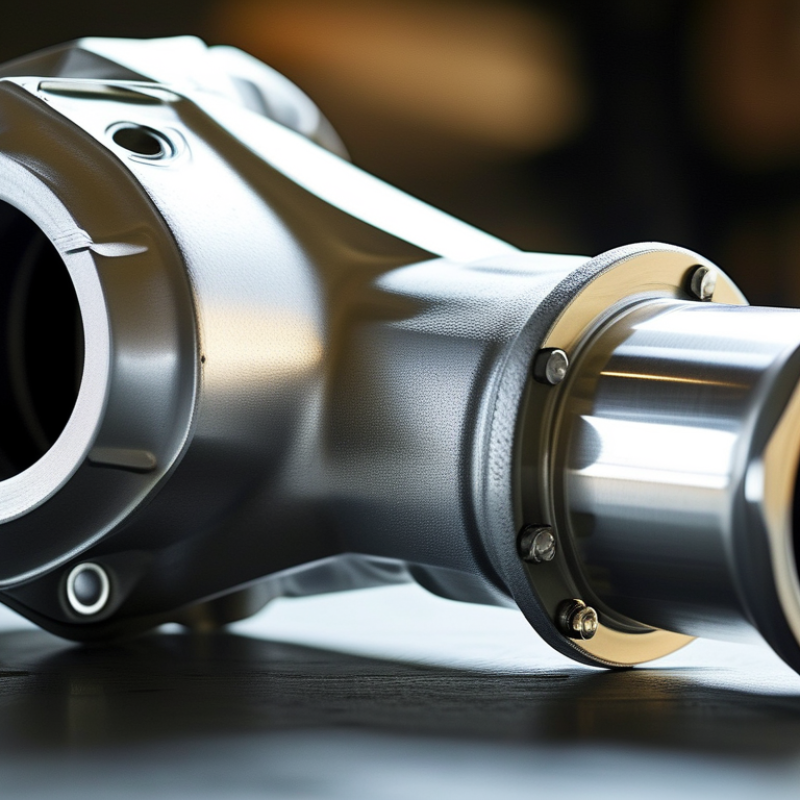
Choosing a titanium muffler starts with understanding the material. Titanium is light, strong, and resistant to corrosion. It can reduce rear-end weight without feeling fragile. Its pale metallic surface may develop blue, purple, or gold heat colors. These changes are normal. They show real temperature exposure.
Construction matters as much as the metal itself. Check the shell thickness, weld consistency, inlet diameter, and internal packing. A well-finished weld should look even, without dark cracks or rough edges. Perforated cores influence gas flow and sound. Dense packing usually softens harsh frequencies, while a more open core can sound sharper. That does not always mean better performance. I have seen loud systems feel fast but deliver little measurable improvement.
Performance depends on engine output, pipe length, and tuning. A muffler should support suitable exhaust flow without creating excessive noise. Titanium handles heat well, but repeated thermal cycling can stress thin joints. Mounting alignment also matters. A small angle can load the brackets and cause vibration. Check clearance near body panels, wiring, and heat-sensitive parts. There is no perfect muffler. The lightest option may sacrifice durability, while a heavier design may suit daily use better. Measure your priorities honestly before choosing. Maybe appearance influences the decision more than expected. That is worth admitting.
The figures below are typical reference values for commonly used titanium grades and muffler designs. Actual performance depends on wall thickness, weld quality, packing, gas temperature, engine calibration, and vehicle installation.
| Selection Dimension | Commercially Pure Titanium Grade 2 |
Ti-3Al-2.5V Grade 9 |
Ti-6Al-4V Grade 5 |
Ti-6Al-4V ELI Grade 23 |
|---|---|---|---|---|
| Typical Use in a Muffler | Heat shields, low-stress shells, and corrosion-focused applications. | Lightweight tubing and formed sections where improved strength and ductility are useful. | High-performance muffler shells, end caps, and structural sections requiring high strength. | Specialty components where improved fracture toughness and low-interstitial chemistry are priorities. |
| Approximate Density | 4.51 g/cm³ | 4.48 g/cm³ | 4.43 g/cm³ | 4.43 g/cm³ |
| Typical Minimum Tensile Strength at Room Temperature | About 345 MPa | About 620 MPa | About 895 MPa | About 795 MPa |
| Typical Minimum Yield Strength at Room Temperature | About 275 MPa | About 483 MPa | About 828 MPa | About 725 MPa |
| High-Temperature Strength Retention | Moderate; strength decreases as temperature rises. | Good for thin-wall exhaust tubing and moderate thermal loading. | Very good for motorsport-style exhaust components, subject to actual gas temperature and duty cycle. | Good, with performance broadly similar to Grade 5 in many exhaust applications. |
| Weldability | Generally good when welded with high-purity shielding gas and clean joint preparation. | Good, but requires careful shielding because titanium reacts readily with oxygen and nitrogen at welding temperatures. | Good with qualified TIG or orbital welding procedures; contamination can cause brittle welds. | Good with controlled welding procedures and strict surface cleanliness. |
| Corrosion Resistance | Excellent in many atmospheric and aqueous environments because of its stable oxide layer. | Excellent general corrosion resistance. | Excellent general corrosion resistance, including resistance to road-salt exposure. | Excellent general corrosion resistance. |
| Forming and Fabrication | Relatively easy to form, but thin material can distort during welding. | Good balance of formability and strength for bent tubing. | More difficult to form than commercially pure grades; springback and cracking control may be needed. | Similar fabrication considerations to Grade 5. |
| Thermal Conductivity | Low compared with stainless steel, so heat can remain concentrated in local areas. | Low; thermal gradients should be considered near welds and mounting points. | Low; thermal expansion and localized heat concentration require appropriate clearances. | Low; use similar heat-management practices to Grade 5. |
| Best Choice When | Corrosion resistance and cost control are more important than maximum strength. | A balance of ductility, strength, and lightweight tubing is required. | The project prioritizes high strength, low mass, durability, and performance-oriented construction. | Low-interstitial chemistry and enhanced toughness are specifically required. |
| Important Limitation | Lower strength may require thicker walls or additional reinforcement. | Less ultimate strength than Grade 5 in heavily loaded or highly stressed areas. | Higher material and fabrication cost; poor shielding or contamination during welding can seriously reduce joint reliability. | Usually more expensive and less commonly selected when standard Grade 5 performance is sufficient. |
| Muffler Construction Factor | Recommended Specification or Practical Guidance | Effect on Performance |
|---|---|---|
| Core Design | Use a perforated straight-through core for low restriction and strong high-rpm flow. | Usually improves gas flow and reduces back pressure, but may provide less noise attenuation than a chambered design. |
| Chambered Design | Use internal chambers, reflection plates, or tuned passages when sound reduction is more important than maximum flow. | Can reduce specific frequency ranges effectively, but may add pressure drop and internal weight. |
| Absorption Packing | Use high-temperature, non-combustible acoustic packing designed for exhaust temperatures. | Reduces broadband exhaust noise; packing density and retention strongly affect service life and sound consistency. |
| Shell and End-Cap Thickness | Choose thickness according to vibration, impact exposure, thermal cycling, and mounting loads rather than weight alone. | Thinner walls reduce mass but are more sensitive to denting, fatigue, weld distortion, and bracket loads. |
| Weld Quality | Use clean TIG or orbital welds with complete inert-gas coverage on both sides of the joint. | Proper shielding helps prevent oxidation, discoloration, embrittlement, leaks, and premature fatigue cracking. |
| Mounting Brackets | Use flexible, well-supported hangers and avoid transferring engine movement directly into the muffler shell. | Reduces vibration fatigue and stress concentration around bracket welds. |
| Heat Management | Provide adequate clearance from body panels, wiring, fuel components, and sensitive underbody parts. | Titanium is lightweight and corrosion resistant, but exhaust surface temperatures can still damage nearby components. |
| Pipe Diameter | Match the inlet and outlet diameter to engine displacement, power level, target rpm range, and existing exhaust flow requirements. | Oversized tubing can reduce gas velocity and affect response; undersized tubing can increase restriction and heat. |
| Sound Target | Define the acceptable sound level, tone, and operating range before selecting core length, perforation, and packing volume. | A muffler optimized for maximum flow may not provide the quietest or most comfortable street-driving sound. |
| Quality Verification | Check material traceability, wall thickness, weld penetration, leak tightness, bracket alignment, and dimensional consistency. | These checks improve reliability and help prevent exhaust leaks, fatigue failures, and installation problems. |
Reference note: Mechanical properties are representative minimum values commonly associated with ASTM/ASME titanium product specifications; exact values vary by product form, heat treatment, thickness, and applicable standard.